
As our planet shifts towards a greener outlook on everything we do, how we live, travel, or consume digital products, it has increasingly become the responsible option to move towards more sustainable web design practices like eco-optimised websites that are good for our environment.

What is an eco-optimised website?
A few years ago, the idea of an eco-optimised or ‘green’ website sounded like a wonderful idea for niche companies who were looking to save our planet. Today, sustainable web design practices are fast becoming a real discussion point between agencies and their clients. Businesses are becoming increasingly aware of their digital footprint, they’re starting to ask what their website costs to run. Not just financially but environmentally too.
Sustainable website design (also called green web design) is the practice of creating an eco-optimised website that uses less energy, puts less strain on the environment, and provides a better user experience. It also ranks better and converts more reliably. This might include taking actions such as reducing image file sizes, or switching to a web host that runs on renewable energy,
So what does an eco-optimised website actually look like in practice? And how do we balance technical sophistication with environmental awareness without losing the visual polish clients expect? Let’s break it down.
The hidden weight of the modern web design
As the digital world expands, websites grow heavier year on year. The average page weight today can easily climb past 2MB, and many go far beyond that because of oversized imagery, layered animation, endless scripts and third-party marketing tags. Every kilobyte has to travel through servers, data centres, cables and mobile networks before it reaches a user’s screen. The heavier the site, the more energy the journey consumes and the slower the page feels.
A study in 2020 revealed that the internet, with its devices, networks, and data centers, requires energy that accounts for 4% of the world’s electricity consumption in a single year. The larger your website is, the more energy it requires. And the harder it is to navigate, the more power that gets wasted by visitors who might reload the page or click links unnecessarily before leaving in frustration.
What is even more fascinating is that the average webpage creates 0.8 grams of CO2 per pageview. So if your webpage has nearly 10 000 pageviews a month, it’s producing nearly 100kgs of CO2 emissions a year (Source: Website Carbon Calculator). This is a staggering figure when you consider how many websites are out there.
As you can see, being more sustainable is the better option in the long run and also highly beneficial performance-wise. When you explain this to clients, you can almost see the gears turning. ‘So a lighter site helps the environment, helps our SEO, helps user experience and helps retention?” Exactly. Once people understand the link between weight and impact, they’re usually quite keen to tidy things up.

Slimming down page weight without sacrificing quality of design
Most websites can lose a surprising amount of weight without looking any different to the human eye. The worst culprits are images but it’s an easy fix to slim them down. High-res photographs taken from smart phones are always massive files. Running them through a compressor trims their size dramatically, especially when paired with next-generation formats like WebP or AVIF.
The same goes for icons and decorative elements. Replacing PNGs with SVGs avoids the problem entirely because SVGs are just code. They scale neatly and usually weigh a tiny fraction of their raster equivalents.
Then there’s the issue of ‘just in case’ assets. Many sites load fonts, scripts, animations or CSS that they never actually use. A quick audit often reveals entire libraries that can be removed or swapped for lighter alternatives.
Designers often worry that optimisation will water down their visuals, but it actually doesn’t as well-compressed images still look sharp. And motion still has impact when it’s purposeful rather than constant. Essentially, a lighter website that has been thoughtfully optimised will still have the same impact but now its performance is aligned with being more responsible to the good of our planet.
The growing resistance to autoplay, oversized video and heavy animation
From a digital marketing perspective, many agencies advocated for the autoplay video option on their client’s home page. This was considered a high-impactful way to grab attention. While these videos were often helpful, now they are increasingly viewed as a high-cost distraction. Videos are very heavily weighted formats online and have a huge footprint with oversized videos the worst. Autoplaying means that every load is wasteful in every sense and most users scroll straight past it.
The same goes for animation that fires on every scroll or loads large JavaScript bundles to perform relatively simple visual tricks. Motion has its place, but the industry is starting to distinguish between meaningful interaction and decoration that comes with a heavy footprint.
Many brands are already scaling back these elements because they’ve realised they slow the site, drain battery on mobile, and irritate users with limited data. Removing or limiting autoplay and heavy animation is one of the simplest ways to create a greener, quicker experience. When chosen intentionally, motion feels more premium than something that fires constantly.
Caching and CDNs: The quiet heroes of efficiency
Caching isn’t a glamorous topic, but its impact is enormous. When a website caches pages correctly, returning visitors load much faster and trigger far fewer server requests. This means less data moved across the network and less energy consumed on the hosting side.
Content Delivery Networks (CDNs) work in a similar way. They store copies of your content closer to users around the world so data travels shorter distances. That reduces load on the origin server and cuts energy consumption across the network. CDNs are now so accessible that there’s no good reason for most sites not to use them. Clients rarely notice the technical details, but they definitely notice the speed.
Lighter infrastructure and the move to greener hosting
While the front end is very important for those unaware of the moving parts behind it, the hosting environment itself plays a significant role in a website’s carbon footprint. Data centres draw huge amounts of power. Some providers rely heavily on fossil fuels; others invest in renewable energy and smart cooling systems. A growing number of clients now ask where their website is hosted and how sustainable that provider is.
Switching to a green-energy host doesn’t just reduce environmental impact. It often comes with modern infrastructure, better uptime and stronger security. A lean, well-built website sitting on an energy-efficient host is a compelling value proposition, especially for businesses trying to future-proof their brand.
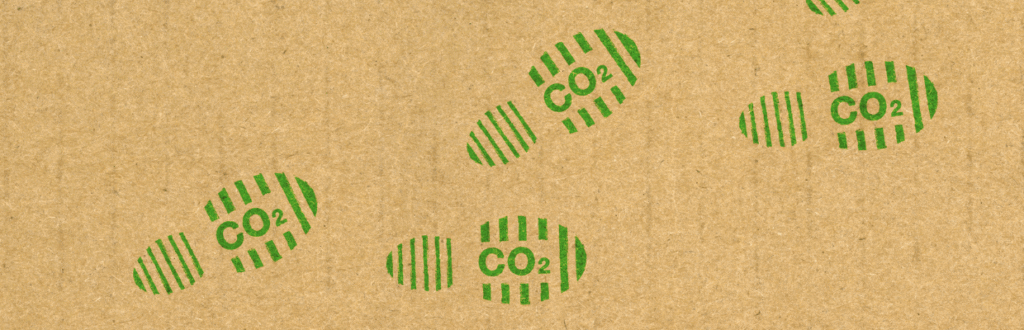
Reducing our carbon footprint needs to be the rule, not the exception
As society becomes more aware of how much we harm our planet and how much we rely on the digital world every day, the need for eco-optimised websites will become the norm. It’s part of a wider shift in how people think about our ever-expanding digital presence. Regulators are beginning to look more closely at energy consumption in tech infrastructure, and the industry is preparing accordingly.
There’s no single formula for building the perfect eco-optimised website. Every project has its own goals and constraints but the conversation about being more eco-friendly is getting more traction. This doesn’t mean everything visual or dynamic needs to be discarded. Instead, it’s about asking better questions like ‘does this video need to autoplay?’ Or ‘Is this animation adding value?’ Being more innovative and frugal with what we already have is a good way to start. A greener website isn’t just lighter on the planet, it’s lighter on your device, lighter on bandwidth, and lighter on frustration. That should be the rule, not the exception.