
If your business has invested in search engine optimisation, you will have noticed that the rules of online visibility are shifting. Google rankings still matter – but they are no longer the complete picture. AI-generated answers, voice search, and chat-based tools such as ChatGPT and Perplexity are now part of how people find businesses, and they do not always direct users to the top-ranked website.
This guide explains the three pillars of modern search visibility: Search Engine Optimisation (SEO), Answer Engine Optimisation (AEO), and Generative Engine Optimisation (GEO). It covers what each one means, why they matter for SMEs specifically, and most importantly – what to actually do about them, in a realistic order of priority.
1. How search behaviour is changing
The way people search for products, services, and information has changed more in the past three years than in the previous decade. Users increasingly expect answers immediately, in plain language, without clicking through multiple websites to find them.
Several converging trends are driving this shift:
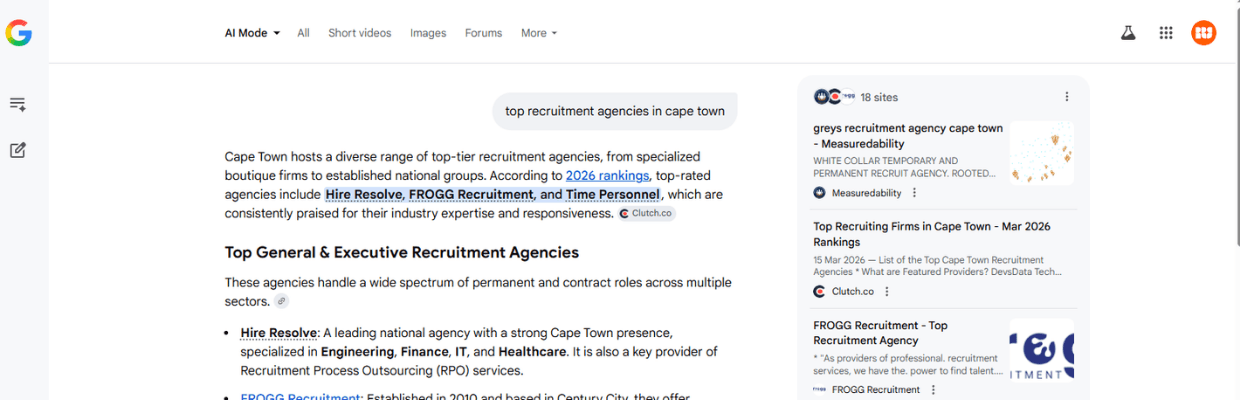
- Google AI Overviews now appear in over 25% of all Google searches, up from 13% in early 2025, based on analysis of 21.9 million queries (Hellobar, 2026). These AI-generated summaries appear above organic results and frequently answer the user’s question without a click.
- Zero-click searches are growing. AI Overviews alone reduce organic click-through rates by approximately 58%, according to Ahrefs research from February 2026. Around 93% of AI search sessions end without a website visit.
- Voice search now accounts for over 58% of searches used to find nearby businesses. Voice assistants require short, direct answers – not lists of links.
- AI chat tools including ChatGPT, Perplexity, and Bing Copilot allow users to ask conversational questions and receive synthesised responses drawn from multiple sources, with no traditional search results page involved.
- Local intent now drives approximately 46% of Google searches. ‘Near me’ queries have grown by around 500% in recent years. For most SMEs, this is the single highest-impact search channel.
According to DataReportal’s Digital 2025 report for South Africa, 99.3% of South African internet users access the web via smartphone. For local SMEs, this makes mobile page speed and AEO – which powers voice search and featured snippets on mobile – disproportionately important compared to markets where desktop still dominates.
The practical implication for SMEs: a business can rank on page one of Google and still be absent from the answers that a growing proportion of potential customers actually see. Optimising for traditional rankings alone is no longer sufficient.
2. SEO, AEO and GEO explained
These three strategies are complementary layers, not competing approaches. SEO builds the foundation; AEO ensures your content delivers direct answers; GEO increases the likelihood that AI systems cite your business when generating responses. Each one reinforces the others.
| Strategy | Goal | Where it appears | Optimisation focus | SME priority |
|---|---|---|---|---|
| SEO High |
Improve organic rankings | Google, Bing results pages | Technical quality, content depth, backlinks | High - the foundation everything else builds on |
| AEO High |
Deliver direct answers | Featured snippets, AI Overviews, voice search, People Also Ask | FAQ format, structured data, schema markup | High — captures zero-click and voice queries immediately |
| GEO Medium |
Earn AI citations | ChatGPT, Perplexity, Google AI Overviews, Bing Copilot | Authority signals, expert authorship, cited sources | Medium — builds long-term brand trust over 6–12 months |
What is SEO?
Search Engine Optimisation improves how a website ranks in traditional search engine results. It covers technical factors (site speed, mobile compatibility, structured data), on-page content quality, and the authority signals that come from other websites linking to yours. Google uses over 200 ranking signals to determine which pages deserve the top positions.
For SMEs, SEO is the essential starting point. Without a technically sound, well-structured website, neither AEO nor GEO has a strong foundation to build on.
What is AEO?
Answer Engine Optimisation structures content so that search engines and AI systems can extract clear, direct answers. The goal is to appear in featured snippets, Google AI Overviews, People Also Ask boxes, and voice search responses – all of which deliver answers without requiring the user to click through to a website.
AEO requires writing in a question-and-answer format, using concise definitions, and implementing schema markup: structured code that tells search engines what type of content a page contains (FAQ, product, service, local business, and so on). Featured snippets appear in approximately 25% of all search results.
What is GEO?
Generative Engine Optimisation is the practice of making your content more likely to be cited or summarised by AI tools such as ChatGPT, Perplexity, and Google AI Overviews. The term was formalised in a 2024 research paper from Princeton, Georgia Tech, and IIT Delhi, and is still the most recently defined of the three disciplines.
GEO depends on being a credible, citable source: publishing accurate content backed by visible expertise, building a strong online reputation, and ensuring your business is clearly associated with the topics you want to be known for. AI systems do not simply pull from the highest-ranked page – they weight authority, consistency, and citation by other trusted sources.
Note on terminology: the terms AEO and GEO are sometimes used interchangeably across the industry. The distinction used here – AEO for structured answer delivery, GEO for AI citation and summarisation – reflects the most common usage, but you may encounter them defined differently in other guides.
3. How SEO, AEO and GEO work together
A user’s search journey no longer follows a single path. Someone researching a supplier might begin with a Google search, switch to ChatGPT to compare options, and then return to Google Maps for a local result. Businesses that are optimised for only one of these touchpoints are invisible in the others.
The three strategies work as progressive layers:
- SEO establishes your website as a trustworthy, technically sound source. This is the prerequisite for everything else.
- AEO extracts value from that foundation by structuring content for direct answer delivery. It captures zero-click, voice, and AI Overview visibility.
- GEO extends your presence into AI-generated summaries and chat-based search, where traditional rankings have no direct influence.
Shared actions create efficiency: improving content structure for AEO (clear headings, FAQ sections, schema markup) also strengthens SEO rankings and GEO citation likelihood. In most cases, one well-executed content update serves all three strategies simultaneously.
4. A practical example: an HR consultancy
Consider a small HR consultancy wanting to attract SME clients searching for employment law advice. Here is how all three strategies apply in practice, using the same content asset.
The SEO layer
A Cape Town-based labour law consultancy publishes a well-structured service page on employment contracts. It loads quickly, is mobile-friendly, has a clear title tag (“Employment contract advice for SMEs – Cape Town”), a descriptive meta description, and links from the firm’s other pages and from directories such as the Cape Chamber of Commerce member listing. This establishes the page as a credible, indexable resource for South African search queries.
The AEO layer
The same page includes a FAQ section answering questions specific to South African employment law: “What must be included in an employment contract under the Basic Conditions of Employment Act?”, “Is a verbal employment contract legally binding in South Africa?”, “What are an employer’s obligations under the Labour Relations Act?” Each answer is written in plain language, in 40–60 words, directly below the question. FAQ schema markup is added so Google can surface these answers in featured snippets or AI Overviews for South African searches.
The GEO layer
The firm publishes a detailed annual guide to amendments to South African labour legislation, covering updates from the CCMA, the Department of Employment and Labour, and recent Labour Court rulings. It is written by a named senior consultant with SABPP registration or relevant legal credentials visible on the page. Over time, other South African HR publications, business associations such as Business Unity South Africa, and regional news outlets reference the guide. AI tools searching for authoritative employment law content for South African SMEs begin to cite the firm.
A technically sound service page with a FAQ section delivers AEO results within weeks. GEO results from the authority-building content accumulate over months. The investment compounds.
5. Keyword strategy: why one article is not enough
The term ‘SEO AEO GEO’ is a high-competition informational keyword dominated by established marketing agencies and large publications. An SME-focused site will not outrank them on the generic term without significant domain authority. The more effective approach is to own a specific angle – SME-focused, SA-specific, sector-specific – and build topical authority progressively through a pillar-and-cluster structure.
This article serves as the pillar page. The supporting cluster articles target specific long-tail keywords with lower competition, each linking back here:
| Pillar article (this page) | Supporting cluster articles to commission |
|---|---|
| SEO, AEO and GEO for small businesses | What is FAQ schema markup and how to add it |
| How to appear in Google AI Overviews | |
| What is E-E-A-T and how SMEs can demonstrate it | |
| How to optimise your Google Business Profile | |
| How to check whether AI tools are recommending your business |
Each cluster article is shorter (800–1,200 words), answers one specific question, and is published over several months. Together, they signal to Google that the site is a credible, comprehensive source on this topic cluster – which raises the ranking potential of the pillar page.
6. The implementation checklist
Phase 1 – Foundations (one-off tasks, do these first)
- Verify your site in Google Search Console. Confirm there are no crawl errors, that all key pages are indexed, and that mobile usability is passing. This is free and takes under 30 minutes to set up.
- Run your site through Google PageSpeed Insights. Resolve any issues scoring below 70 on mobile. Page speed is a direct ranking factor and a prerequisite for AI crawlers.
- Complete your Google Business Profile in full. Business category, services, opening hours, photos, and a description that includes your primary service keywords. This is the highest single-leverage action for local search visibility.
- Audit your NAP consistency (NAP refers to Name, Address, and Phone number in Local SEO, crucial for consistent business listings). Your business name, address, and phone number must be identical across your website, Google Business Profile, and every directory listing. Inconsistencies confuse search engines and suppress local rankings.
- Ensure every key page has a unique meta title and meta description. Use your SEO plugin (Yoast or Rank Math on WordPress) or your CMS’s built-in SEO fields. Avoid duplicate titles across pages.
Phase 2 – AEO (applied to existing pages, start here for quick wins)
- Open Google Search Console and filter by question-based queries. Go to Performance > Search Results and filter Queries by ‘what’, ‘how’, ‘why’, ‘when’. Any question-based query getting over 20 impressions per month with a click-through rate below 5% is an AEO target.
- Rewrite those pages to lead with a direct answer. For each target question, open your answer with a clear, standalone paragraph of 40–60 words. Follow with supporting detail. The direct answer must appear without the user needing to scroll.
- Add FAQ sections to your top five service or product pages. Use AlsoAsked or AnswerThePublic to find the questions people actually search for in your sector. Answer each one in plain language.
- Add FAQ schema markup to those pages. Use Google’s free Structured Data Markup Helper, your SEO plugin’s schema tool, or a schema generator such as Merkle’s. Validate the markup using Google’s Rich Results Test before publishing.
- Check your pages load in under two seconds on mobile. AEO visibility in voice search and AI Overviews is penalised by slow load times. Use PageSpeed Insights to identify and fix the largest contributors.
Phase 3 – GEO (ongoing, builds over 6–12 months)
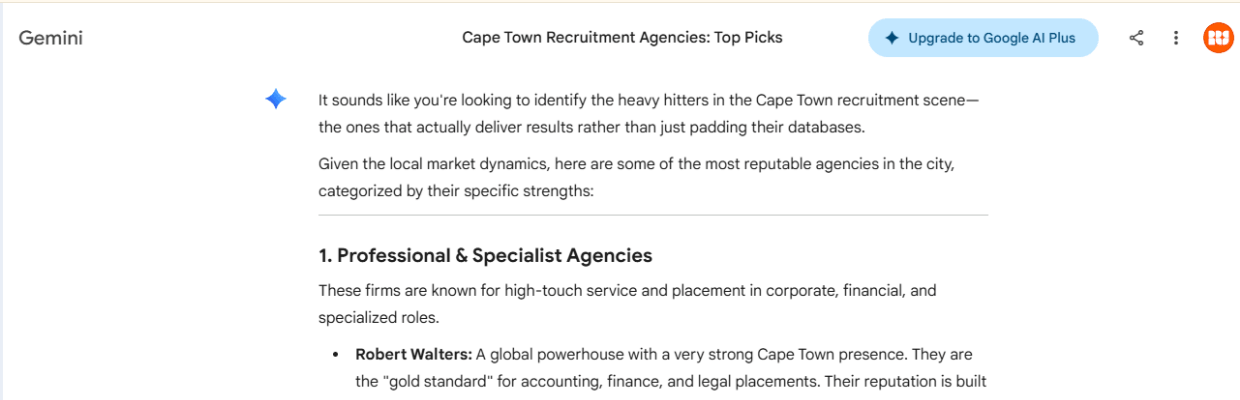
- Establish your baseline. Search your business name and primary service in ChatGPT, Perplexity, and Google AI Overviews. Screenshot the results. Repeat this monthly. Improvement here is your GEO metric.
- Identify who AI tools are already citing in your sector. Search your primary service keywords in Perplexity and note which sources it references. Those publications are your GEO targets – they are the sites you need to earn mentions from.
- Publish one substantive, expert-authored piece of content per month. Minimum 1,000 words. Named author with visible credentials. Cited sources (government, industry bodies, academic research where applicable). This is the core GEO activity and the results compound over time.
- Add author bio pages to your website. Each key content contributor should have a page listing their qualifications, experience, and areas of expertise. Link to this from every piece of content they are responsible for. This is a direct E-E-A-T signal.
- Seek coverage from credible external sources. Target relevant South African business press (BusinessTech, Daily Maverick Business, Fin24, Business Report, and regional publications such as Cape Business News), industry associations including Business Unity South Africa (BUSA), the Cape Chamber of Commerce, and sector-specific bodies such as the NSBC or SAICA for finance-related businesses. Trade body resource pages and government-linked directories such as the SEDA (Small Enterprise Development Agency) website are also worth pursuing. One link from a domain with authority above 50 has more impact than 50 directory submissions.
- Request specific, detailed client reviews. Encourage clients to mention your service, location, and a specific outcome in their Google reviews. AI systems weight consistent, specific review language when assessing local authority.

7. Why E-E-A-T underpins all three strategies
E-E-A-T stands for Experience, Expertise, Authoritativeness, and Trustworthiness. It is the framework Google uses in its Google’s Search Quality Rater Guidelines to assess content quality, and it is the single most important factor in determining whether AI systems treat your content as a citable source.
The four elements function as cumulative signals. Each one reinforces the others, and a weakness in any one of them limits the effectiveness of your SEO, AEO, and GEO efforts regardless of how well-optimised your technical setup is.
| Element | What it means | How to demonstrate it | Practical SME example |
|---|---|---|---|
| Experience | First-hand, practical involvement with the subject | Case studies, client results, testimonials, before-and-after data | An HR consultancy shares a real example of how it helped a client avoid an unfair dismissal claim — not a generic guide to employment law |
| Expertise | Professional knowledge and subject-matter depth | Accurate, thorough content written or reviewed by a qualified specialist | A physiotherapist writes the clinic's injury advice pages, rather than a general copywriter working from online research |
| Authoritativeness | Recognition as a credible source by others in the field | Press mentions, citations from reputable sites, professional credentials displayed clearly | A solicitor featured in a regional business publication, with Law Society membership visible on the firm's website |
| Trustworthiness | Confidence built through transparency and accuracy | Named author bios, visible contact details, privacy policy, up-to-date content, cited sources | Every service page shows the name and qualification of the person responsible for that content, with a last-reviewed date |
For most SMEs, the highest-impact E-E-A-T improvement is also the simplest: put a named, credentialled person behind your key content. Anonymous pages with no author attribution score poorly on every dimension of this framework – and AI systems are specifically trained to discount them.
8. How to measure whether your efforts are working
Each strategy has different metrics, different timescales, and different tools. Tracking all three separately gives you a clear picture of what is working and where to focus attention.
Measuring SEO
- Organic sessions and ranking positions for your primary keywords – Google Search Console (free) or Semrush / Ahrefs for more detail.
- Core Web Vitals scores in Google Search Console under Experience > Core Web Vitals. All key pages should pass.
- Index coverage – check the number of pages Google has indexed versus the number submitted in your sitemap.
- Backlink growth – track new referring domains over time. Quality matters more than quantity.
Measuring AEO
- Question-based impressions and click-through rates in Google Search Console, filtered by queries beginning with ‘what’, ‘how’, ‘why’, ‘when’. High impressions with low clicks on a question query typically means your content is appearing as a zero-click answer – this is a positive AEO signal, not a problem.
- Featured snippet appearances – monitor manually by searching your target questions in Google, or use Semrush’s Position Tracking tool filtered by SERP features.
- Rich Results status – check in Google Search Console under Enhancements > FAQs to confirm your schema is being recognised and served.
Measuring GEO
- Monthly manual AI checks – search your primary service keywords in ChatGPT, Perplexity, and Google AI Overviews. Note whether your business or content is cited. This is your GEO baseline.
- Brand mention monitoring – set up Google Alerts (free) for your business name and key service terms. A rise in unlinked brand mentions is an early GEO signal.
- AI referral traffic – in Google Analytics 4, go to Acquisition > Traffic Acquisition and look for referrals from perplexity.ai, chatgpt.com, and bing.com, which carries Copilot traffic.
Realistic timescales for SMEs:
| Strategy | Early signals | Meaningful results | Primary tool |
|---|---|---|---|
| SEO (technical fixes) | 2–6 weeks | 3–6 months | Google Search Console |
| AEO (FAQ schema, structured content) | 2–4 weeks | 4–8 weeks | Search Console + Rich Results Test |
| GEO (authority building, expert content) | 1–3 months | 6–12 months | Manual AI checks + Google Alerts |
| Local SEO (Google Business Profile) | 1–2 weeks | 4–8 weeks | Google Business Profile Insights |
These timescales assume consistent effort – publishing at least monthly, maintaining technical hygiene, and actively building external mentions. A site that publishes once and waits will not see these results regardless of content quality.
9. Where to start if you have limited time
Most SMEs do not have a dedicated digital marketing team. If you have limited time, work through these five actions in order. Each one builds on the previous.
- Complete your Google Business Profile. If you have not done this yet, it is the single highest-return action available to any local SME. It takes under an hour and delivers local search visibility within days.
- Fix your technical foundations. Page speed, mobile usability, and correct indexing are prerequisites. Use Google Search Console and PageSpeed Insights, both free.
- Add FAQ sections to your top five pages. Use AlsoAsked or AnswerThePublic to find the right questions. Write plain-language answers of 40–60 words. Add FAQ schema markup. This is where AEO wins come from most quickly.
- Publish one expert-authored piece of content per month. Named author, cited sources, genuine expertise. This is your GEO investment and it compounds over time.
- Build external mentions gradually. Target relevant SA business press, industry associations, and trade body resource pages. Prioritise quality over volume.
10. Summary
SEO, AEO, and GEO represent three layers of the same goal: making your business discoverable regardless of how a potential client is searching. Traditional rankings remain important, but they are no longer the whole game.
The good news for SMEs is that the foundational actions – technically sound pages, well-structured FAQ content, named and credentialled authors, consistent local presence – are accessible without an enterprise budget or a large team. They are also the same actions that build long-term authority and compound in value over time.
Businesses that build these habits now are well-placed for a search landscape in which AI-generated answers continue to grow in prominence. The underlying requirement has not changed: produce credible, accurate, expertly authored content that genuinely serves your audience. The channels through which that content is discovered are simply expanding.
If you would like help implementing these strategies, see our website generative engine optimisation services.