
A new website project lands on your desk with a healthy budget attached – and your in-house team is already at full capacity. Turn it down, and you’ve lost revenue you didn’t have to lose. Hire to cover it, and you’re carrying a fixed cost long after the project ends.
This is the dilemma most agency owners eventually run into, and it’s why white-label partnerships have gone from a stopgap to a structural part of how agencies scale. To make the right call, you need to look past the hourly rate and weigh the full cost of an in-house WordPress developer vs. white-label development partner – across cost, capacity, risk, and scalability.
The true cost of an in-house web developer
Most agency owners price an in-house developer by their base salary alone. Once you add recruitment, overhead, and unbillable bench time, the real financial commitment is considerably higher.
1. Recruitment and onboarding
Finding a competent full-time developer in a competitive market costs time and money. Expect to pay R15,000–R30,000+ on recruitment agency fees, job board postings, and technical testing platforms.
Then factor in onboarding: it typically takes four to six weeks for a new developer to learn your agency’s workflow, tools, and client accounts. During that period, they’re operating at roughly 50% productivity while drawing full pay.
2. Salary, benefits, and overheads
A competitive full-time package ranges from R450,000 to R850,000+ per annum, depending on experience. Add company tax contributions, medical aid or wellness subsidies, bonuses, and IT/tech provisions (laptop, software licenses), and you’re looking at another 15–25% on top of base salary – pushing the real annual commitment to roughly R520,000–R1,060,000.
That said, an in-house hire isn’t without upside. They’re embedded in your agency’s culture, understand your clients and processes, and are available for quick discussions or last-minute changes – valuable if web development is a significant, steady part of your workload.
It’s also worth being realistic about what one hire actually covers. Even strong developers specialise: one may be excellent at back-end functionality, another at front-end, others at UX/UI, SEO, performance, security, integrations, or conversion optimisation. One person doesn’t give your agency expertise across all of these. As client needs grow, you may fi
3. The cost of sitting on the bench
An in-house hire means paying for at least 160 hours a month regardless of your pipeline. When client sign-offs slip or sales slow down, the developer still costs the same. Five idle days a month works out to roughly R15,000–R30,000 in unbillable overhead.
4. Retention and Turnover Risk
If your agency relies on a single developer, work slows or stops whenever they’re on leave, sick, in training – or gone for good. Client deadlines don’t wait, so account managers end up managing expectations while projects stall. If that developer leaves, you lose institutional knowledge and start another recruitment cycle before you’re back to full capacity.
The white-label model: Handling growth without hiring again
Winning new work exposes capacity limits fast. Land three website projects in one month with a single in-house developer, and something gives – overtime, delayed launches, or turning away profitable work.
A white-label partner solves this by making extra capacity available on demand: developers, designers, and project managers scale up as demand rises, without your agency committing to permanent salaries or carrying overhead in quieter months.
A white-label WordPress agency operates as an extension of your business, under your brand. Instead of paying for one person’s time, you pay for completed milestones or a predictable monthly retainer.
1. Instant access to a multi-disciplinary team
One in-house developer rarely covers every discipline at an expert level. Outsourcing gives you a full specialist team for less than the cost of one senior full-time hire:
- Front-end and back-end developers for custom functionality
- UX/UI designers for websites that look modern and convert
- SEO and PPC experts to optimise technical performance and visibility from launch
- Dedicated project managers to run client communication and timelines, so account managers don’t have to manage technical sprints
Coverage is also more resilient: if one developer is on leave, another steps in. You’re relying on a team, not an individual — which reduces delays from illness, leave, or turnover.
2. Scale up or down with your workload
With a white-label partner, execution capacity mirrors your sales. Sell five website builds this month, and your partner scales up to deliver them. Sell none next month, and your development cost drops to zero — no unbillable staff sitting idle.
3. Less management and maintenance burden
Managing technical talent takes technical knowledge. If you can’t audit code quality or configure a server environment, managing an in-house developer is genuinely hard. A structured white-label partnership hands that burden to the partner — they run their own QA and delivery timelines, and handle post-launch security, updates, and bug fixes without draining your internal resources.
Most established white-label partners also offer more than development: SEO, PPC, hosting, maintenance, security monitoring, performance optimisation, UX/UI and content support. That means one trusted partner instead of several vendors to source and manage.
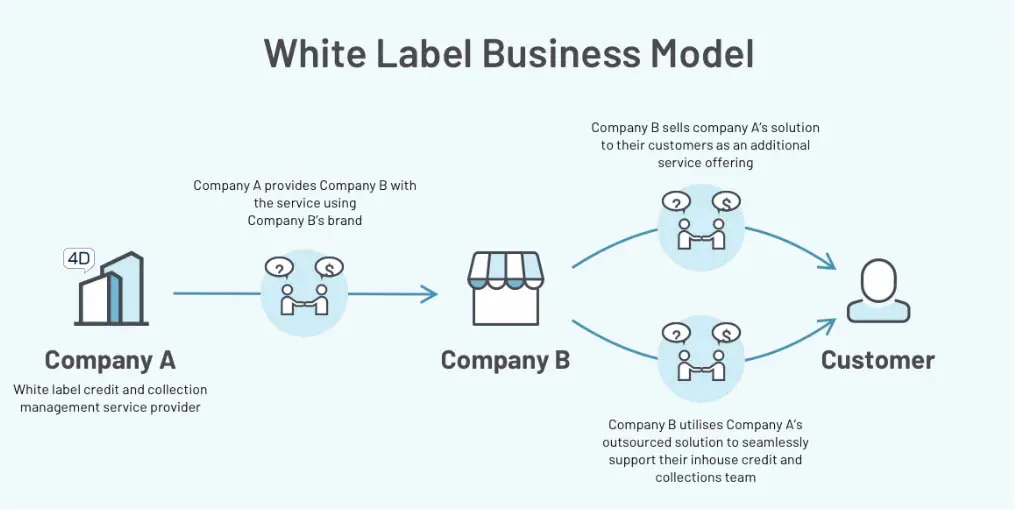
image credit : https://torchbankz.com/start-white-label-business/
Decision checklist: Which model fits your agency?
Choose an in-house developer if:
- You have a consistent, guaranteed 35+ billable web development hours every week
- Your core business is building proprietary, experimental web products – not standard client sites
- You have the technical leadership in place to interview, vet, and manage developer performance
- You need face-to-face, real-time collaboration for spontaneous creative adjustments
- You have enough steady work to keep a developer fully occupied, even in quieter months
Choose a white-label partner if:
- Your development pipeline fluctuates unpredictably month to month
- You want to offer premium services (advanced SEO, custom apps, high-end UI) without hiring four specialists
- You want to cap financial risk and eliminate unbillable downtime
- You’d rather spend leadership time on client acquisition and account growth than managing code deployments
- You need projects to keep moving even when individual team members are on leave or out sick
Website Development starts with a comprehensive plan to cover all the essentials your online business needs. Whether you are looking for a white-label partner or a development team, chat with us about your requirements.